
GHG Emissions Sources
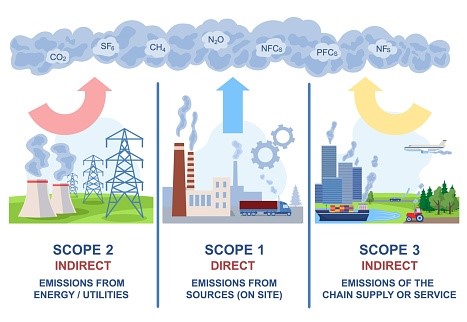
Greenhous Gases (GHG) emissions are grouped in Scope 1, 2, and 3. It consist of gases that trap heat in the atmosphere and contribute to the warming
of the Earth's surface, causing climate change.
The
most common gases monitored are carbon dioxide (CO2), methane (CH4), nitrous oxide (N2O), and fluorinated gases (HFCs, OFCs, and SF6).
Carbon dioxide enters the atmosphere through burning fossil
fuels, solid waste, trees, and other biological materials and certain chemical
reactions, and is removed from the atmosphere when it is absorbed by plants as
part of the biological carbon cycle.
Methane
is emitted during the production and transport of coal, natural gas, and oil,
as a result from livestock and other agricultural practices, land use, and by
the decay of organic waste in municipal solid waste landfills.
Nitrous oxide is emitted during agricultural,
land use, and industrial activities; combustion of fossil fuels and solid
waste; as well as during treatment of wastewater.
Fluorinated gases are synthetic greenhouse
gases that are emitted from a variety of household, commercial, and industrial
applications, and processes.
The sources of fluorinated gases are:
1.
HFCs gas is used in refrigeration and air conditioning systems, foam
insulation, aerosols, fire protection, and solvents.
2.
PFCs gas is used in semiconductor manufacturing, aluminum production;
production of certain consumer products such as non-stick cookware,
stain-resistant textiles, and fire-fighting foam; refrigeration and
air-conditioning system.
3.
SF6 is used in magnesium and aluminum production.